
The Zod Test
Disclosure Day and the Mythology That Never Lands

Spoilers ahead. The argument requires them.
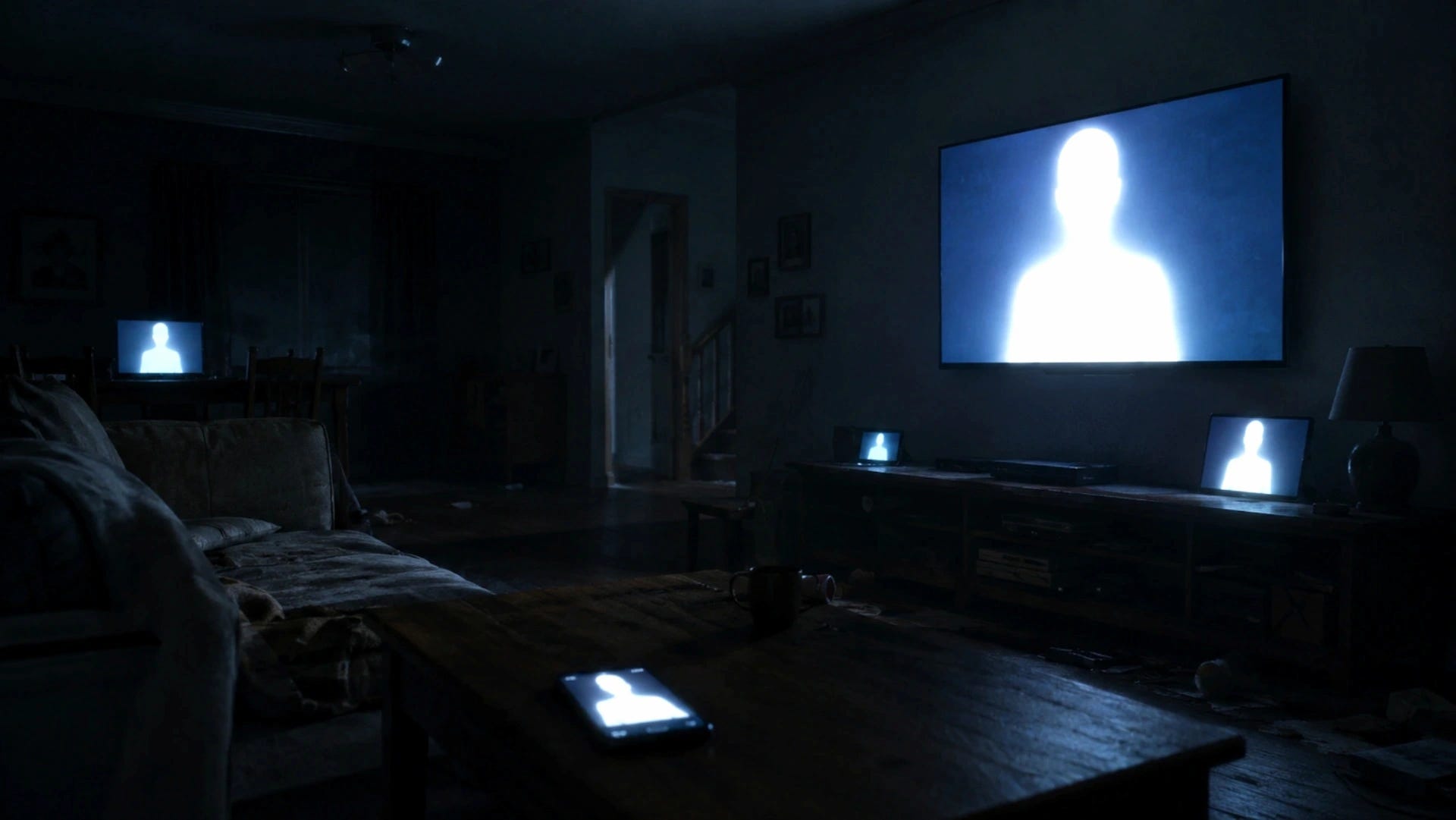
There is a scene in Man of Steel where General Zod hijacks every screen on the planet. Phones, televisions, languages, all at once. He does not ask permission and consults no government. He simply appears, and the whole earth hears him in the same moment.
Zod just talks.
It is a villain’s speech. But it passes a test that most fictional aliens fail, and one that Steven Spielberg’s Disclosure Day never even considers.
Call it the Zod Test. Anything that can cross interstellar space can introduce itself directly, in every language, to everyone at once. Power on that scale has no use for middlemen, and no reason to brief presidents, bury programs, or abduct children and seed them with gifts in the hope it pays off three decades later.
A visitor that wants to be known can be known. Trivially and without ambiguity.
Disclosure Day refuses to ask why its aliens chose differently.
The premise is simple enough. Aliens visited decades ago. They took children and planted abilities inside them. Then left and waited, trusting the plan would unfold on its own amid ordinary human chaos.
The film frames this as benevolence. Empathy, even. These beings are described as creatures of kindness, contrasted with warlike humans edging toward World War III. The resistance group that guards their secret regards them as something close to gods.
But the logic collapses the moment you hold it up to light.
If the aliens want the world to know they exist, why not say so? A living alien is already among them. The technology to reach Earth has been demonstrated. Yet the best available option is to kidnap sleeping children, alter their biology without consent, and hope nothing goes wrong for three decades?
What if one of those children gets sick? Hit by a car? Locked up? The entire revelation of extraterrestrial life rests on a plan where every link is a single point of failure, held together by faith.
None of this is interrogated. It is presented as wonder.
Denis Villeneuve already solved this problem. In 2016.
In Arrival, the heptapods do what Spielberg’s aliens will not. They land where the whole world can see them. A linguist is brought in to bridge the gap. The work is slow, the progress uncertain. Tension emerges from the genuine problem of two radically different minds reaching toward each other.
The heptapods do not kidnap or alter any humans.
They pass the Zod Test. Not by hijacking CNN. By doing the closest equivalent their nature allows. Showing up. Being patient. Meeting humans halfway.
Arrival treats contact as a communication problem.
Disclosure Day treats it as a power ritual disguised as grace.
Even the invasions announce themselves. In Independence Day, the ships do not creep in unseen. They park over every major city at once, in plain daylight, for the whole world to watch. Those aliens came to erase humanity.
Openness is not benevolence. It is what power looks like when it has no reason to whisper.
This distinction matters beyond cinema. It maps directly onto how the real-world disclosure mythology operates.
The classic UFO story follows a reliable script. They are here. Governments know. Everything is hidden in deep black programs. And the proof is always imminent. Another hearing. Another whistleblower. Another classified file just out of reach.
Grant the premise of an advanced visitor and the secrecy story buckles under its own weight.
The whole arrangement assumes the aliens are boxed in by the same bureaucratic physics we are, negotiating for access like a rival state. But anything that crossed the distance between stars answers to no permit office. It could go over every government’s head the instant it wanted to, and stopping it would be hopeless. The one thing such a visitor would never need is a back channel to the Pentagon.
So the “secret channel” story makes far more sense when the real actors are human. Militaries. Intelligence communities. Contractors. Leveraging secrecy for terrestrial reasons: power, funding, technological edge.
The Pentagon admitted to fabricating alien technology rumors near Area 51 in the 1980s. The purpose was to shield classified aircraft programs. This is documented history, not speculation.
Once that precedent exists, every subsequent disclosure push has to clear a simple bar: is this another instance of the same known tactic? Before it earns the label of transparency.
Most do not clear it.
The timing is worth noting.
In February 2026, amid growing pressure over the Epstein files, the announcement came that UFO and UAP records would be released. Representative Thomas Massie named it plainly. A weapon of distraction.
The pattern recurs. The 2017 New York Times UFO story arrived during a cycle of political scandal. The 2023 hearings landed amid broader institutional distrust. The Podesta and Clinton UFO conversations surfaced during an election year.
UFO stories serve this purpose perfectly. They are unfalsifiable. The public fractures into believers and skeptics. Everything looks like conspiracy, which makes actual corruption harder to isolate. The frame shifts from implicated individuals to cosmic mystery, and attention scatters while real questions go quiet.
Congressional hearings on the subject resolve nothing. “Disclosures” produce no disclosure. Whistleblowers deliver ambiguity, not evidence. The promise of truth absorbs the demand for accountability. Indefinitely.
Disclosure Day arrives in the middle of this cycle. A ~$200 million film that takes the mythology at face value. Benevolent aliens who kidnap children, operate through confusion, refuse to speak plainly, and receive worship for the trouble.
The film does not challenge the disclosure narrative. It is the disclosure narrative. Given an IMAX screen and a John Williams score.
Spielberg once understood something different. Close Encounters ended with music. Two species finding a shared language through sound. Simple. Direct. It trusted the audience to feel the weight of contact without mythology holding it up.
Forty-nine years later, the same filmmaker traded that clarity for abduction, possession, and institutional mysticism. The aliens grew less interesting. The humans, less capable. And the one question that should anchor any contact story went entirely unasked.
Why would a benevolent civilization do any of this?
Maybe it would not. Perhaps what we are watching, on screen and off, is something older and more familiar. The same institutional machinery running its oldest pattern. Control through opacity. Leverage dressed as revelation.
The truth does not need thirty years and a traumatized child to reach you.
It just talks.
— no-one
Thoughts you didn’t think, written for you anyway
This piece is part of a larger body of work that doesn’t move with the feed. It stays put.
outsourcedtoai.com
Related essays:
The System Doesn’t Need a Mastermind
The same conclusion without the aliens: what looks orchestrated is only aligned incentive.
The Easiest Person to Fool
The same deception turned inward: a story survives because we would rather not audit it.